Outdoor living spaces have become one of the most desirable features for homeowners. Whether you’re hosting summer barbecues, relaxing with family, or increasing your property’s appeal to future buyers, adding an outdoor space can significantly enhance both lifestyle and home value.
Two of the most popular options are decks and patios, but homeowners often wonder which one delivers the better return on investment.
In this guide, we’ll compare decks vs patios, including cost, maintenance, durability, and resale value, to help you decide which option adds more value to your home.
What Is a Deck?
A deck is a raised outdoor platform typically built with wood or composite decking materials. Decks are usually attached to the back of a home and supported by posts and beams.
Decks are commonly made from:
- Pressure-treated lumber
- Cedar or redwood
- Composite decking (such as Trex or TimberTech)
- PVC decking materials
Decks are especially popular for homes with sloped yards or uneven terrain, since they can be elevated above the ground.
Benefits of a Deck
1. Higher Return on Investment
Decks generally offer one of the best returns among home improvement projects. According to industry remodeling reports, homeowners often recover 60–75% of the cost of building a new deck when selling their home.
2. Expands Usable Living Space
Because decks are elevated and connected directly to the house, they function almost like an extension of your indoor living area.
3. Great Views
If your property overlooks a lake, forest, or scenic yard, a deck allows homeowners to enjoy those views better than a ground-level patio.
4. Custom Design Options
Decks can include many custom features, such as:
- Multi-level layouts
- Built-in seating
- Outdoor kitchens
- Deck lighting
- Pergolas or shade structures
These features can dramatically improve both usability and visual appeal.
What Is a Patio?
A patio is a ground-level outdoor living space usually made from stone, concrete, pavers, or brick. Unlike decks, patios are built directly on the ground and are not raised structures.
Common patio materials include:
- Concrete slabs
- Paver stones
- Natural stone
- Brick
Patios are typically built in backyards and are ideal for properties with flat terrain.
Benefits of a Patio
1. Lower Installation Cost
Patios generally cost less to install than decks. Depending on materials and labor, patios may cost 30–50% less than a comparable deck.
2. Long-Term Durability
Stone, brick, and concrete patios are extremely durable and can last for decades with minimal structural maintenance.
3. Minimal Maintenance
Unlike wood decks that require staining or sealing, patios usually only need occasional cleaning or pressure washing.
4. Seamless Landscape Integration
Patios often blend naturally with landscaping elements such as:
- Fire pits
- Outdoor kitchens
- Walkways
- Garden features
This can create a cohesive backyard design.
Deck vs Patio: Cost Comparison
Cost is one of the biggest factors homeowners consider when deciding between a deck and a patio.
Average Deck Cost
The cost to build a deck depends on materials, size, and custom features.
Typical price ranges:
- Pressure-treated wood deck: $30–$60 per square foot
- Composite deck: $50–$90 per square foot
- Premium custom decks: $100+ per square foot
Composite decking materials tend to cost more upfront but require less maintenance over time.
Average Patio Cost
Patios are generally more affordable because they don’t require structural framing.
Typical price ranges:
- Concrete patio: $10–$20 per square foot
- Paver patio: $15–$35 per square foot
- Natural stone patio: $25–$50 per square foot
However, costs can increase if your yard requires grading or drainage improvements.
Deck vs Patio: Which Adds More Home Value?
Both decks and patios can increase property value, but decks typically deliver a slightly higher return on investment.
Why Decks Often Add More Value
There are several reasons decks tend to perform better in resale value:
1. Elevated Outdoor Living
Decks feel like an extension of the home’s structure, which many buyers perceive as additional living space.
2. Modern Buyer Demand
Outdoor living has become a major real estate trend. Buyers often look for features like composite decks, built-in seating, and outdoor entertainment areas.
3. Strong Visual Impact
A well-designed deck can transform the look of a home’s exterior and create a strong first impression for buyers.
That said, a professionally designed patio can still provide excellent value, especially in regions with warm climates where ground-level outdoor spaces are more common.
Deck vs Patio: Maintenance Requirements
Maintenance is another important factor when choosing between a deck and a patio.
Deck Maintenance
Wood decks require regular care to maintain appearance and prevent damage.
Maintenance tasks may include:
- Cleaning and power washing
- Staining or sealing every 2–3 years
- Replacing damaged boards
- Inspecting structural components
Composite decking reduces maintenance significantly but still requires occasional cleaning.
Patio Maintenance
Patios typically require much less maintenance.
Common upkeep tasks include:
- Sweeping debris
- Pressure washing surfaces
- Replacing occasional pavers
- Sealing stone or pavers every few years
Overall, patios are considered the lower-maintenance option.
Deck vs Patio: Durability and Lifespan
Durability varies depending on materials used.
Deck Lifespan
- Pressure-treated wood deck: 10–15 years
- Cedar or redwood deck: 15–20 years
- Composite deck: 25–30+ years
Composite materials are increasingly popular because they resist rot, fading, and insect damage.
Patio Lifespan
Patios often last longer than decks.
- Concrete patio: 30+ years
- Paver patio: 30–50 years
- Natural stone patio: 50+ years
Because patios sit directly on the ground, they are less vulnerable to structural wear.
When a Deck Is the Better Choice
A deck may be the best option if:
- Your yard has sloped terrain
- You want an elevated view
- You prefer a raised outdoor living space
- You want strong resale appeal
- Your home already has a second-story entrance to the backyard
Decks also provide more opportunities for multi-level designs and creative layouts.
When a Patio Is the Better Choice
A patio may be the better option if:
- Your yard is flat and spacious
- You want a lower-cost outdoor upgrade
- You prefer low maintenance
- You want a space for fire pits or outdoor kitchens
- You want a natural extension of landscaping
Patios also work very well for large entertaining areas.
Can You Have Both?
Many homeowners are now choosing to combine both features.
For example:
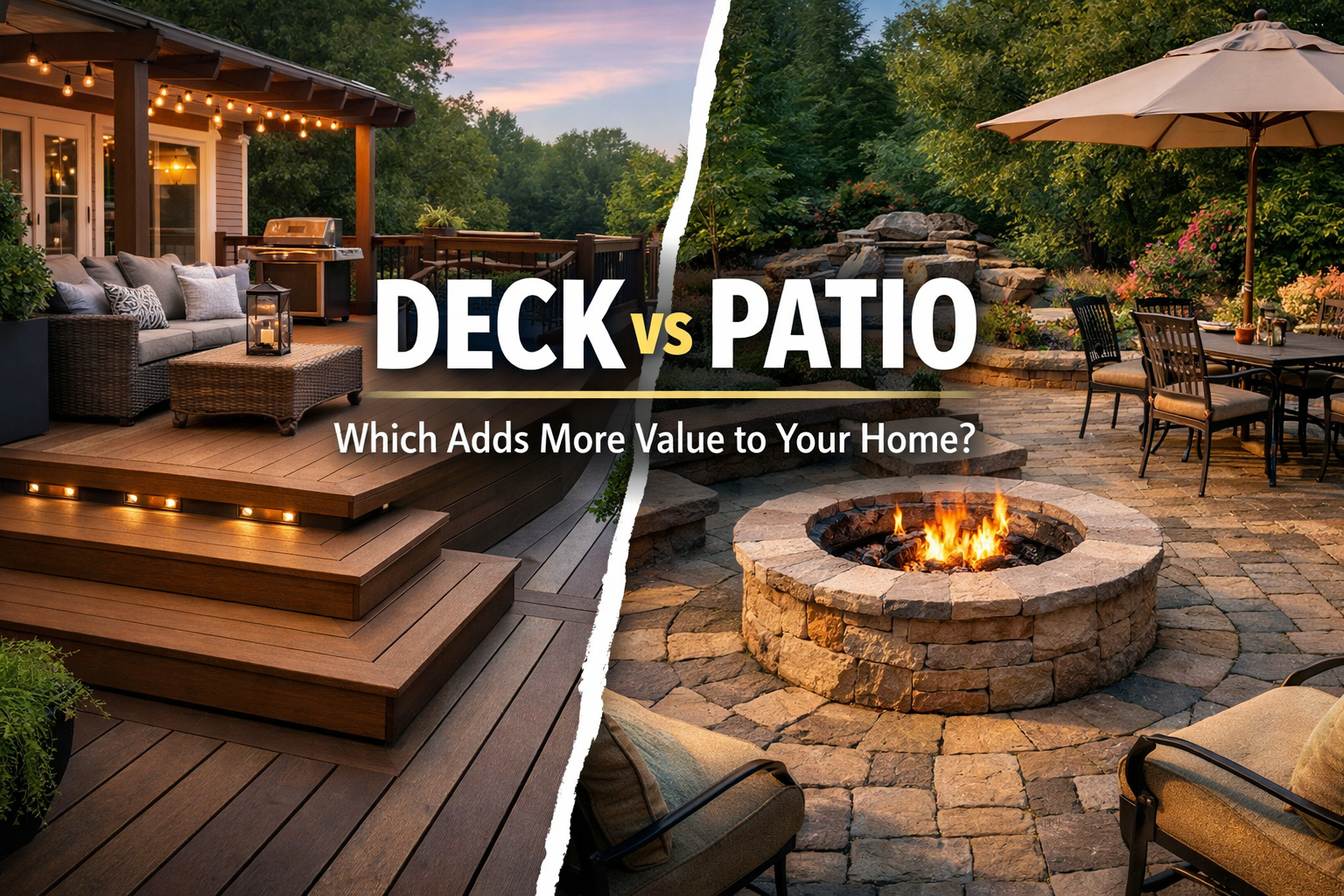
- A raised deck connected to the home
- A paver patio below with a fire pit or seating area
This layered outdoor design creates a dynamic backyard space and can significantly improve usability.
In fact, combining a deck and patio can maximize outdoor living while increasing property appeal to potential buyers.
Final Thoughts
Both decks and patios can enhance your home’s functionality, appearance, and resale value. The best choice ultimately depends on your property layout, budget, and long-term goals.
If maximizing home value is your priority, a well-built deck often provides a slightly higher return on investment, especially when designed with modern materials and attractive features.
However, patios offer outstanding durability, lower costs, and minimal maintenance, making them a great option for many homeowners.
Before starting your project, it’s always a good idea to consult with a professional deck builder or outdoor contractor who can evaluate your yard and recommend the best solution for your home.
With the right design and materials, either option can transform your backyard into a beautiful outdoor living space you’ll enjoy for years to come.