Building a deck is one of the most rewarding home improvement projects you can take on. A well-designed deck expands your living space, increases your home’s value, and creates a perfect spot for relaxing, entertaining, and enjoying the outdoors. However, deck construction is also one of the most common DIY and contractor projects where costly mistakes can occur.
At Decks by RTC, we’ve seen firsthand how small missteps can lead to major issues down the road—from structural failures to expensive repairs and safety concerns. Whether you’re planning a DIY deck or hiring a professional, understanding these common pitfalls can help ensure your project is safe, durable, and built to last.
Below are six of the most common mistakes homeowners make when building a deck—and how to avoid them.
1. Skipping Permits and Ignoring Local Building Codes
One of the biggest mistakes homeowners make is starting a deck project without checking local building codes or obtaining the required permits. While it may seem like an unnecessary hassle, permits exist to ensure your deck meets safety and structural standards.
Ignoring local regulations can lead to:
- Fines or penalties
- Failed inspections
- Having to tear down and rebuild the deck
- Issues when selling your home
Building codes dictate everything from footing depth and railing height to ledger board attachment and load requirements. These standards vary by location and climate, especially in areas with frost lines, heavy snowfall, or high winds.
How to avoid this mistake: Always check with your local building department before starting construction. If you hire a professional contractor like Regan Total Construction, we handle permits and ensure every detail meets or exceeds code requirements.
2. Improper Foundation and Footings
Your deck is only as strong as the foundation beneath it. One of the most common structural failures occurs when footings are improperly installed or not deep enough. Shallow footings can shift, sink, or heave due to frost, moisture, or soil movement.
Common footing mistakes include:
- Not digging below the frost line
- Using the wrong type of concrete or footing system
- Placing footings on unstable soil
- Spacing footings too far apart
Over time, these issues can cause the deck to sag, tilt, or even collapse.
How to avoid this mistake: Have a professional evaluate your soil conditions and determine the correct footing depth and spacing. Properly poured concrete footings or engineered pier systems will provide long-term stability and peace of mind.
3. Incorrect Ledger Board Installation
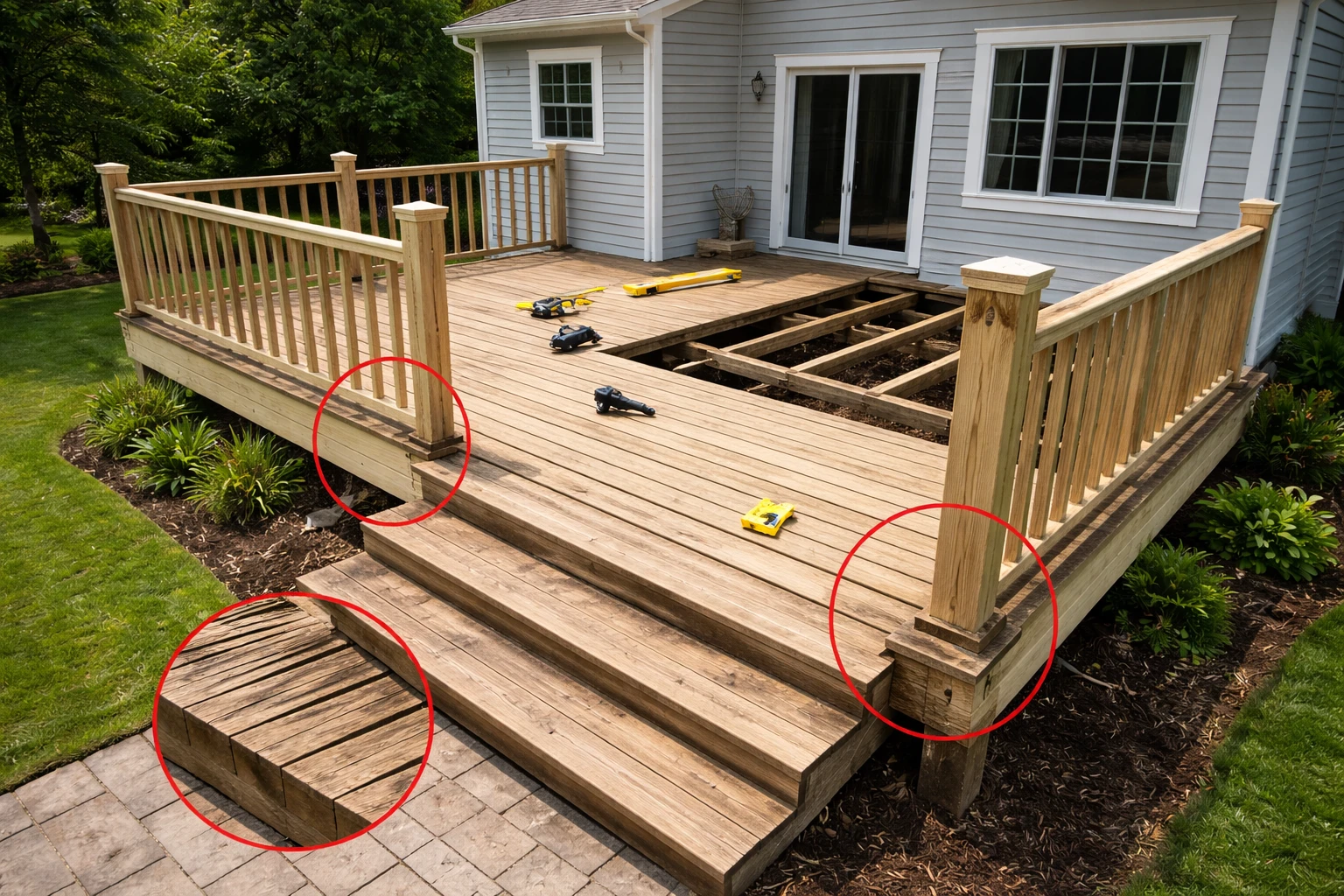
The ledger board is the piece of lumber that attaches the deck to your home. When installed incorrectly, it can lead to water intrusion, rot, and even catastrophic deck failure. In fact, many deck collapses occur because the ledger board wasn’t properly secured.
Common ledger mistakes include:
- Using nails instead of structural bolts or lag screws
- Failing to install proper flashing
- Attaching to non-structural materials like siding or brick veneer
- Not sealing penetrations to prevent moisture damage
How to avoid this mistake: Ledger boards should be attached directly to the home’s structural framing using approved fasteners and spacing. Metal flashing and waterproof membranes should be installed to prevent water damage. This is a critical area where professional installation makes a significant difference.
4. Choosing the Wrong Materials
Deck materials play a major role in durability, maintenance, and appearance. Some homeowners choose materials based solely on price, only to discover that cheaper materials require constant upkeep or fail prematurely.
Common material mistakes include:
- Using untreated lumber or indoor-rated materials outdoors
- Choosing low-quality fasteners that rust or corrode
- Not considering climate, sun exposure, or moisture levels
- Overlooking composite or PVC options that may offer better long-term value
How to avoid this mistake: Select materials designed for outdoor use and your specific environment. Pressure-treated lumber, cedar, composite decking, and PVC boards each have advantages depending on your goals and budget. Stainless steel or hot-dipped galvanized fasteners are essential to prevent corrosion and staining.
At Decks by RTC, we help clients choose materials that balance aesthetics, durability, and maintenance requirements.
5. Inadequate Railing and Safety Features
Railings are not just decorative—they are a critical safety feature. Many homeowners underestimate the importance of properly designed railings, stairs, and lighting.
Common safety mistakes include:
- Railings that are too low or spaced too far apart
- Weak balusters or posts that are not securely anchored
- Missing handrails on stairs
- Poor lighting that creates tripping hazards
These issues can lead to serious injuries and may not meet building code requirements.
How to avoid this mistake: Follow local building codes for railing height, baluster spacing, and stair design. Use sturdy materials and secure posts to structural framing. Consider adding low-voltage lighting to steps and pathways for improved visibility and ambiance.
6. Poor Planning for Drainage, Ventilation, and Maintenance
A deck should enhance your home, not create moisture problems. Poor planning can trap water against your home’s foundation, damage siding, or accelerate wood rot.
Common planning mistakes include:
- Blocking drainage paths or gutters
- Building the deck too close to the ground without ventilation
- Failing to slope the deck slightly for water runoff
- Not planning for future maintenance and cleaning access
How to avoid this mistake: Ensure proper spacing and ventilation under the deck to allow airflow and drying. Use flashing and moisture barriers where the deck meets the home. Plan for easy access to clean, seal, or replace boards as needed.
Why Hiring a Professional Deck Builder Matters
While building a deck may seem straightforward, it involves structural engineering, carpentry, waterproofing, and code compliance. A professional contractor brings experience, tools, and knowledge that can prevent costly mistakes and ensure your deck is safe, beautiful, and built to last.
At Decks by RTC, we take pride in delivering high-quality craftsmanship and personalized service. From design and permitting to material selection and final construction, we guide you through every step of the process.
Whether you’re dreaming of a simple backyard platform or a multi-level outdoor living space with stairs, railings, and custom features, our team is here to help you build with confidence.
Final Thoughts
A deck is an investment in your home and lifestyle. Avoiding these six common mistakes will help ensure your project is successful, safe, and enjoyable for years to come. Proper planning, quality materials, and professional installation are key to building a deck that enhances your property and stands the test of time.
If you’re considering a new deck or upgrading an existing one, contact Decks by RTC to schedule a consultation. We’ll help you design and build an outdoor space you’ll love.